More Than a Loud Noise: How Snoring Affects Your Teeth 😴
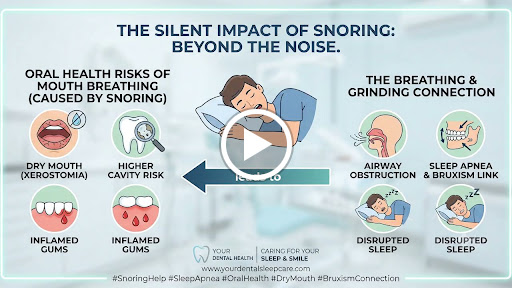
Chronic snoring is often viewed merely as a bedtime nuisance, but it can actually be a key indicator of underlying health issues like sleep apnea—and it leaves a distinct footprint in your mouth. When you snore or struggle to breathe properly at night, you naturally tend to breathe through your mouth rather than your nose. This constant airflow causes a series of dental chain reactions: • Severe Dry Mouth: Mouth breathing rapidly evaporates your saliva. As we've discussed before, a lack of saliva removes your mouth’s natural defense system, allowing plaque bacteria to multiply rapidly overnight. • Higher Risk of Cavities & Gum Issues: Without mineral-rich saliva to protect the enamel and wash away debris, individuals who snore heavily often experience a sudden spike in cavities and inflamed, bleeding gums. • The Grinding Connection: Studies show a strong link between sleep apnea and bruxism (teeth grinding). When the airway partially collapses, the brain often triggers the jaw muscles to clench or grind in an involuntary effort to reopen the airway. How dentistry can help: During a routine exam, we don't just look at teeth—we evaluate the back of the throat, tongue size, and wear patterns on your enamel. If you or a partner notice chronic snoring alongside morning headaches or a perpetually dry mouth, a dental checkup is a fantastic place to start mapping out a solution for better sleep and a healthier smile!