More Than a Bad Habit: How Nail-Biting Damages Your Teeth 💅🚫
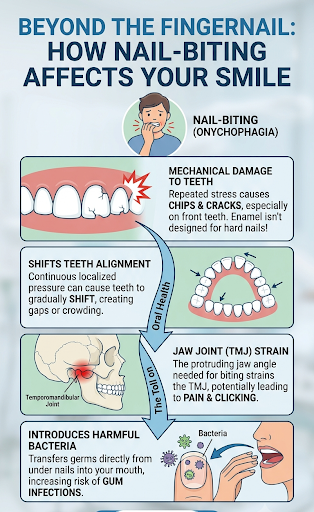
Nail-biting (known medically as onychophagia) is a very common nervous habit. While many people worry about the cosmetic appearance of their nails, this habit can actually cause serious, long-term mechanical damage to your teeth and jaw. The constant, repetitive force of biting down on hard nails impacts your mouth in several ways: • Chipped or Cracked Enamel: Your front teeth are designed for cutting soft food, not grinding down on hard, fibrous nails. Over time, the stress of nail-biting can cause tiny microscopic fractures or visible chips in your enamel. • Shifting Teeth: The continuous, localized pressure of biting can actually cause your front teeth to gradually shift out of alignment over months and years, leading to gaps or crowding. • Jaw Joint Strain (TMJ Discomfort): To bite a nail, you have to position your lower jaw at an unnatural, protruding angle. This repetitive, uneven pressure strains your temporomandibular joints (TMJ), potentially leading to chronic jaw pain, clicking, or headaches. • Introducing Bacteria: Underneath fingernails is a prime hiding spot for harmful bacteria. Biting your nails transfers these germs directly into your mouth, increasing your risk of minor gum infections. How to protect your smile: Breaking a habit is tough, but keeping your nails trimmed short, using bitter-tasting polish, or identifying stress triggers can make a big difference. If you suspect your teeth have alre