Skip to content
Kolkata, West Bengal, 700090

Business hours

OraCare Dental clinic Baranagar

Monday
10:30am-9:30pm
Tuesday
10:30am-9:30pm
Wednesday
10:30am-9:30pm
Thursday
10:30am-9:30pm
Friday
10:30am-9:30pm
Saturday
10:30am-9:30pm
Sunday
11am-2pm

You can anytime during the day with your query.

8240389709

Latest Posts & Updates

Fresh stories, announcements and offers about Dentist, Endodontist, Orthodontist, straight from our business.

The Silent Grinder: Do You Grind Your Teeth at Night? 😴💤

Many people grind or clench their teeth during sleep without ever realizing it. Known medically as sleep bruxism, this involuntary habit can exert massive pressure on your teeth and jaw joints, leading to gradual, silent damage over time. Because it happens while you are fast asleep, you might not know you do it until symptoms start appearing during the day. Common warning signs of nighttime grinding: • Waking Up with Dull Headaches: Constant pressure overnight can lead to tension headaches, particularly around your temples, first thing in the morning. • Sore Jaw Muscles or TMJ Discomfort: Your jaw joints (TMJ) and facial muscles may feel tight, tired, or sore when you chew breakfast. • Unexplained Tooth Flattening or Chips: Over time, the constant friction wears down the biting surfaces of your teeth, making them look unusually flat, short, or prone to chipping. • Increased Temperature Sensitivity: As the protective outer enamel is worn away by grinding, the sensitive underlying dentin becomes exposed. How to protect your smile: If you notice any of these signs, a quick dental evaluation is key. We can look for telltale wear patterns on your enamel. A custom-fabricated nightguard is often the simplest and most effective way to cushion your teeth, absorb the heavy forces of grinding, and protect your jaw joint while you rest!

The Silent Grinder: Do You Grind Your Teeth at Night? 😴💤 post imageRead full post

Whitening Toothpaste vs. Professional Whitening: What’s the Truth? ✨

With so many products promising a "brighter smile" on supermarket shelves, it’s easy to feel confused. Here is the breakdown of what actually works versus what is just marketing. • How Whitening Toothpaste Works: Most whitening toothpastes are actually "stain removers." They use mild abrasive particles to gently scrub away surface stains caused by things like coffee, tea, or food. They do not actually change the natural color of your tooth enamel. • How Professional Whitening Works: Professional treatments (like those we offer in-clinic) use active agents like hydrogen peroxide or carbamide peroxide. These penetrate the enamel and break down the internal molecules that cause deep, stubborn discoloration. A word of caution: If you have sensitive teeth or thinning enamel, the abrasive particles in some whitening toothpastes can cause discomfort over time. If you are looking to truly brighten your smile safely, the best first step is a professional exam. We can help you determine if your discoloration is surface-level or internal and recommend the safest path to reach your aesthetic goals without compromising your tooth health!

Read full post

Why Do My Teeth Feel Sensitive? ❄️🔥

Ever taken a sip of cold water or a bite of hot food and felt a sharp, sudden zing in your tooth? That sensation—known as dentin hypersensitivity—is incredibly common, and it usually tells us one specific thing: your tooth's protective layer is compromised. Underneath your hard, protective enamel lies a layer called dentin, which is full of microscopic tubules that lead directly to the nerves inside your tooth. When enamel thins or gums recede, those tubules become exposed. When hot or cold temperatures hit them, they send a quick signal of pain straight to the nerve. Common culprits for sensitivity: • Brushing too hard: Using a medium or hard-bristled brush, or scrubbing aggressively, can wear down enamel over time. • Acidic foods: Frequent consumption of sodas, citrus, or vinegar can soften enamel, making it easier to wear away. • Gum recession: As gums pull back, they expose the more sensitive root surfaces of your teeth. How to help: > If you are experiencing sensitivity, don't ignore it! A quick checkup can rule out decay or cracks. In the meantime, switching to a soft-bristled toothbrush and a toothpaste specifically formulated for sensitivity can make a world of difference in your comfort.

Read full post

🩸 Myth vs. Fact: Is It Normal for Gums to Bleed? 🤔

If you notice a little bit of pink in the sink when you brush or floss, you might think, "Oh, I must just be brushing too hard," and ignore it. The Truth? Healthy gums should never bleed! Think of your gums like the skin on your hands. If your hands bled every time you washed them, you’d know something was wrong. Bleeding gums are usually an early warning sign of gingivitis (early-stage gum disease), caused by a buildup of plaque along the gumline. The good news? It is entirely preventable and often reversible! 🛑 What should you do if your gums bleed? Don't Stop Flossing: Many people stop flossing when they see blood, but that actually makes the buildup worse. Gentle, daily flossing is key to removing the plaque causing the irritation. Upgrade Your Routine: Pair gentle brushing with an antibacterial mouthwash to help soothe the tissue. Get a Professional Clean: Routine dental cleanings remove the hardened plaque (tartar) that a regular toothbrush simply can't budge. Ignoring bleeding gums can allow early irritation to develop into more serious periodontal disease, which affects the bone supporting your teeth. Catching it early keeps your smile strong and healthy!

🩸 Myth vs. Fact: Is It Normal for Gums to Bleed? 🤔 post imageRead full post

🦷 Dental Myth vs. Fact: Are Hard Toothbrushes Better? 🪥

When it comes to keeping your smile bright, a lot of people think that scrubbing hard with a firm toothbrush is the best way to get teeth clean. The Truth? Hard bristles can actually do more harm than good! Scrubbing your teeth too vigorously or using a firm toothbrush can wear down your enamel (the protective outer layer of your teeth) and lead to gum recession. Once your gums recede, it exposes the roots of your teeth, which can cause painful sensitivity to hot and cold drinks. 💡 What should you do instead? Switch to Soft: Always choose a soft or extra-soft bristled toothbrush. They are tough enough to remove plaque but gentle enough to protect your gums. Focus on Technique: Tilt your brush at a 45-degree angle toward your gum line and use gentle, circular motions rather than sawing back and forth. Let the Brush Do the Work: If you are using an electric toothbrush, you don't need to scrub at all—just guide it along your teeth! Your oral health is completely unique, and what works for one person might not be right for you. If you've been noticing tooth sensitivity or aren't sure if your brushing routine is doing its job, we are here to help you figure out exactly what your smile needs.

Read full post

The Forgotten Step: Why You Should Clean Your Tongue 👅

​When you finish brushing your teeth, your oral care routine isn't quite complete. Your tongue is actually one of the primary hiding spots for bacteria in your mouth! ​The surface of your tongue is covered in tiny bumps called papillae, which have microscopic grooves. These grooves easily trap food debris, dead skin cells, and bacteria, leading to a thin buildup over the course of the day. ​Adding this single, 10-second habit to your daily routine makes a massive difference: ​• Eliminates Bad Breath: Up to 80% of bad breath originates from bacteria lingering on the back of the tongue. Cleaning it targets the root cause far better than temporary mints. • Improves Your Taste: Clearing away the bacterial film unblocks your taste buds, allowing you to experience the full flavor of your food much better. • Boosts Overall Immunity: Reducing the overall bacterial load in your mouth prevents those germs from traveling further down into your system. ​How to do it: Use the built-in ridges on the back of your toothbrush, or pick up a dedicated metal or plastic tongue scraper. Gently sweep from the back of your tongue forward 3 to 4 times, rinsing between sweeps.

The Forgotten Step: Why You Should Clean Your Tongue 👅 post imageRead full post

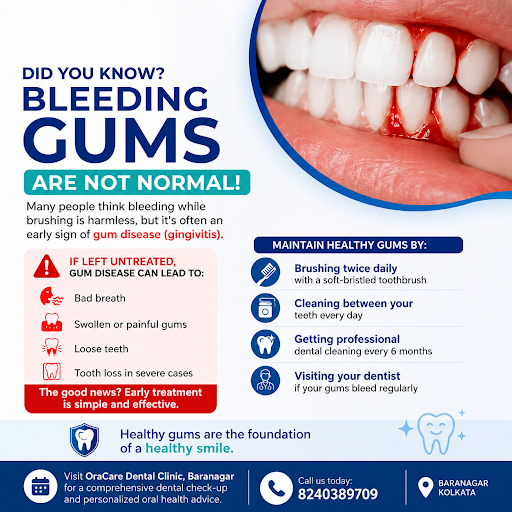
🦷 Did You Know? Bleeding Gums Are NOT Normal!

Many people think bleeding while brushing is harmless, but it's often an early sign of gum disease (gingivitis). ⚠️ If left untreated, gum disease can lead to: • Bad breath • Swollen or painful gums • Loose teeth • Tooth loss in severe cases ✅ The good news? Early treatment is simple and effective. Maintain healthy gums by: ✔️ Brushing twice daily with a soft-bristled toothbrush ✔️ Cleaning between your teeth every day ✔️ Getting professional dental cleaning every 6 months ✔️ Visiting your dentist if your gums bleed regularly Healthy gums are the foundation of a healthy smile.

🦷 Did You Know? Bleeding Gums Are NOT Normal! post imageRead full post

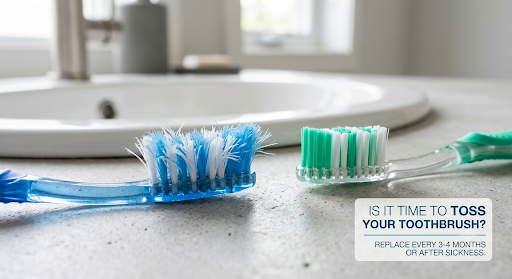
Is It Time to Toss Your Toothbrush? 🪥

It is easy to lose track of how long you have been using the same toothbrush, but using it for too long significantly reduces its effectiveness. As a general rule, you should replace your toothbrush—or your electric toothbrush head—every 3 to 4 months. Here is why: • Frayed Bristles: Once the bristles split or bend, they lose their structural integrity. Instead of sweeping plaque away cleanly, they glide right over it and can actively irritate your gums. • Bacteria Buildup: Toothbrushes live in damp bathrooms, making them prime real estate for microscopic germs over time. Pro Tip: Always swap out your toothbrush immediately after recovering from a cold, flu, or throat infection to prevent accidentally reintroducing bacteria to your mouth!

Is It Time to Toss Your Toothbrush? 🪥 post imageRead full post

Hidden Sugar: The Sneaky Threat to Your Teeth 🍎

When we think about avoiding cavities, our minds instantly go to candies, chocolates, and sodas. However, some of the biggest contributors to enamel decay are hidden in foods that we consider healthy. Starchy snacks like crackers, potato chips, dried fruits, and even white bread break down into simple sugars the moment they mix with your saliva. Because these foods are highly sticky, they cling to the deep grooves of your molars for hours, creating a long-lasting feast for plaque bacteria. To protect your enamel throughout the day: • Rinse with water: If you can't brush immediately after a starchy snack, rinse your mouth thoroughly with water to dislodge lingering debris. • Choose teeth-friendly snacks: Swap sticky foods for crisp, high-fiber options like fresh apples, carrots, or celery, which naturally stimulate cleansing saliva flow.

Read full post